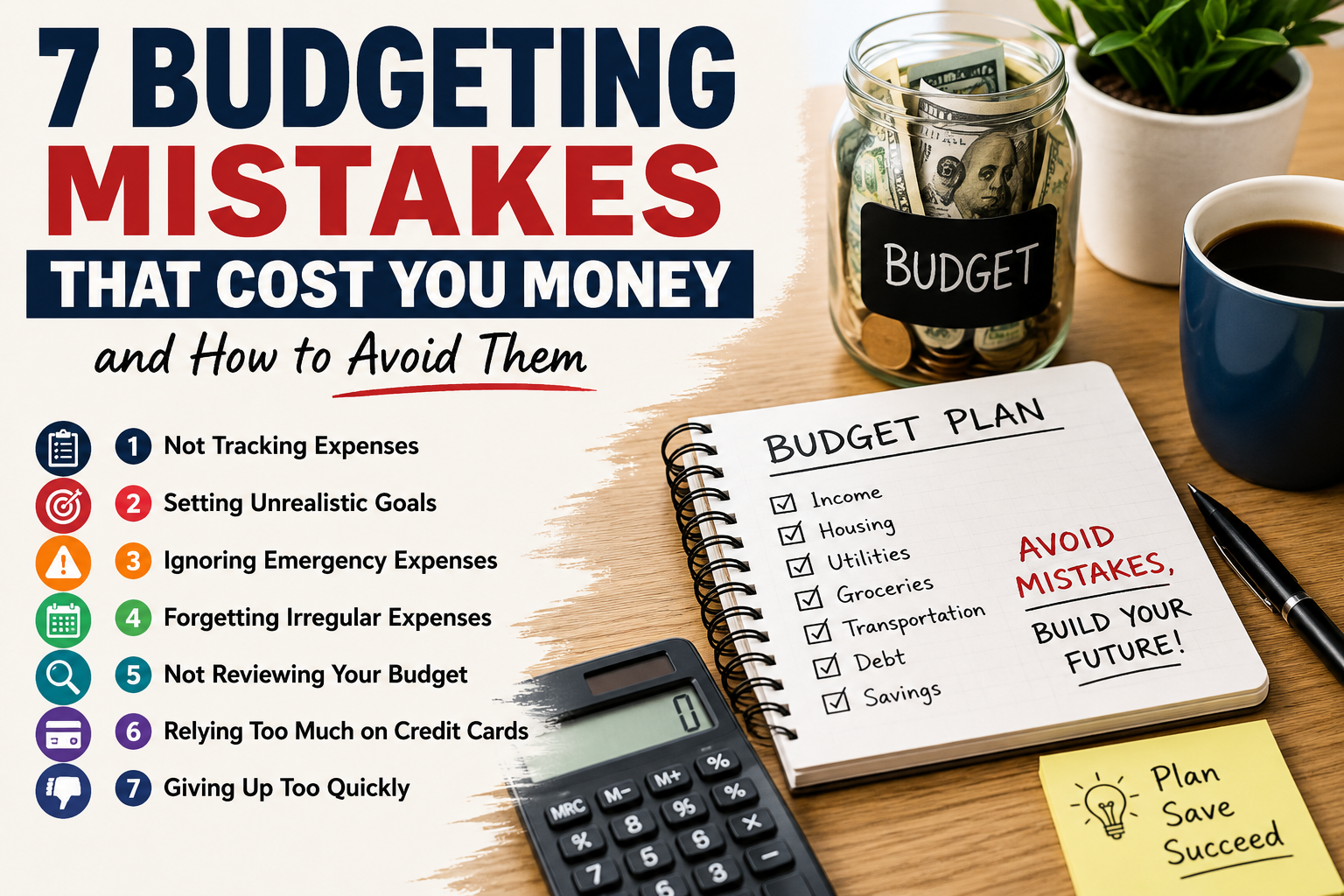
Creating a budget is one of the best ways to manage your finances. However, many people make budgeting mistakes that can lead to overspending, debt, and missed savings goals.
1. Not Tracking Expenses
Many people create a budget but fail to track where their money actually goes. Small purchases can add up quickly and derail your financial plan.
2. Setting Unrealistic Goals
A budget should be practical and achievable. Setting impossible savings goals often leads to frustration and failure.
3. Ignoring Emergency Expenses
Unexpected expenses happen. Without an emergency fund, you may rely on credit cards or loans when problems arise.
4. Forgetting Irregular Expenses
Annual subscriptions, car maintenance, and holiday spending should be included in your budget planning.
5. Not Reviewing Your Budget Monthly
Your income and expenses can change over time. Review your budget regularly and make adjustments when necessary.
6. Relying Too Much on Credit Cards
Using credit cards for everyday spending without a repayment plan can lead to unnecessary debt and interest charges.
7. Giving Up Too Quickly
Budgeting is a long-term habit. It may take several months to find a system that works for you.
How to Avoid These Mistakes
- Track spending consistently
- Review your budget every month
- Build an emergency fund
- Set realistic goals
- Plan for irregular expenses
Final Thoughts
Avoiding common budgeting mistakes can help you save more money, reduce stress, and achieve your financial goals faster. A good budget should be flexible, realistic, and reviewed regularly.